logo
Chengdu Chelation Biology Technology Co., Ltd.
About Us

Chengdu Chelation Biology Technology Co., Ltd.

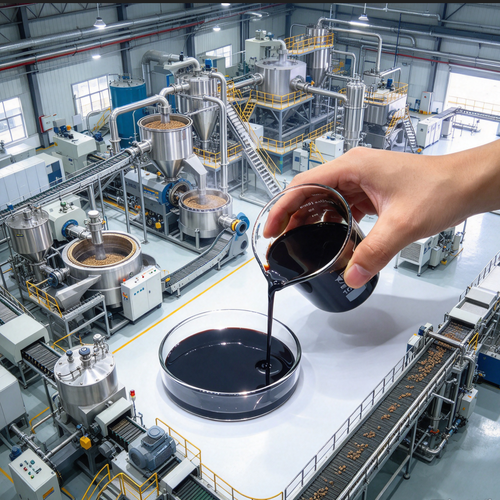
Chengdu Chelation Biology Technology Co., Ltd. was established on the basis of (former Sichuan Skyworth Biotechnology Research Institute, established in 1998). we are a modern high-tech enterprise dedicated to the research and development, production, sales and service of new protein feeds, feed additives, plant extract products, etc.our headquartered located at Jintang High-tech Industrial Park, Chengdu. our company has specialized in feed R&D and production for 25 years. The company's R&D ...
View More
China Chengdu Chelation Biology Technology Co., Ltd.

2008

Year Established

400 +

Annual Sales

all over the world +

customers served

70 +

Employees

News
How to Select Feed Grade Liquid Amino Acids for Feed Mill Production: From Specifications to Dosing Systems
2026-10-26
How to Select Feed Grade Liquid Amino Acids for Feed Mill Production: From Specifications to Dosing Systems Understanding the Role of Liquid Amino Acids in Feed Manufacturing Modern feed mills manage multiple ingredients with different physical properties, nutritional functions, and handling requirements. As production lines become more automated, liquid ingredients require particular attention because their characteristics can affect storage, transfer, dosing, and mixing operations. Feed grade liquid amino acids may be considered for animal nutrition formulations where their verified composition matches the intended nutritional requirements. However, the suitability of a liquid amino acid ingredient depends on more than its product name. Feed manufacturers need to assess its nutritional specification, physical properties, handling requirements, and compatibility with the existing production system. Start With Nutritional Specifications The first step is to establish what the ingredient actually supplies. Total amino acid content, individual amino acid concentrations, free amino acid content, protein content, and nitrogen content are different measurements and should not be used interchangeably. Feed formulators should request a technical data sheet and a batch-specific certificate of analysis (COA). The documentation should identify the declared parameters, analytical methods, and acceptance limits. The formulation team can then determine whether the product provides the amino acid profile required by the target feed. If individual amino acid concentrations are not documented, the material should not be assumed to supply a particular amount of any specific amino acid. Evaluate the Liquid Handling Requirements Liquid ingredients must be compatible with the feed mill's storage tanks, transfer lines, pumps, and dosing equipment. Several parameters are worth reviewing: Viscosity: Influences pumping and flow behavior under defined temperature conditions. Density: Helps establish mass-to-volume relationships for dosing calculations. pH: Provides information relevant to material compatibility and handling. Sedimentation and phase separation: Should be assessed during storage and under intended operating conditions. Storage temperature: Should follow the supplier's documented recommendations. These values should be obtained from product documentation or measured under defined test conditions. They should not be inferred from the general description "liquid amino acids." Integrate the Ingredient Into the Dosing System Before full-scale implementation, the feed mill should verify whether the ingredient can be delivered at the required dosing rate using the existing equipment. A practical evaluation includes checking pump capacity, flow-meter suitability, dosing calibration, line-cleaning procedures, and the method used to distribute the ingredient through the feed mixture. The correct dosing basis also matters. If a formulation specifies ingredient mass but the equipment meters volume, the density value must be established at the relevant temperature. Calibration should be conducted using an appropriate procedure and documented acceptance criteria. Verify Mixing and Finished Feed Quality The next step is to evaluate how the liquid ingredient distributes throughout the intended feed matrix. Results can depend on the application point, addition sequence, mixing duration, feed moisture, and mixer design. Manufacturers should use an appropriate sampling and testing plan to verify mixing uniformity. They should also assess whether the addition changes the finished feed's moisture content or other relevant quality characteristics. Conclusion Selecting feed grade liquid amino acids for feed mill production requires coordinated evaluation of nutritional composition, liquid handling properties, dosing equipment, and finished-feed quality. A clearly documented specification, verified physical parameters, and application-specific trials provide a sound basis for deciding whether a liquid amino acid ingredient fits an industrial feed manufacturing process.
Read More
Latest company news about How to Select Feed Grade Liquid Amino Acids for Feed Mill Production: From Specifications to Dosing Systems
Managing Trace Mineral Requirements in Aquaculture Feed with Organic Magnesium Sources
2026-09-16
Managing Trace Mineral Requirements in Aquaculture Feed with Organic Magnesium Sources Mineral Management Challenges in Aquaculture Nutrition Aquaculture feed formulation requires careful management of nutrients and minerals due to differences among species, production systems, and environmental conditions. Feed manufacturers continuously evaluate mineral ingredients based on nutritional requirements, formulation compatibility, and production efficiency. Application of Chelated Magnesium in Aquatic Feed Amino acid chelated magnesium is used as an organic mineral ingredient option in aquaculture feed formulations. When selecting mineral additives, manufacturers typically consider: · Magnesium specification · Chelation technology · Ingredient compatibility · Processing characteristics · Storage conditions These factors help determine whether an ingredient is suitable for specific aquatic feed production systems. Supporting Advanced Aquaculture Feed Development As aquaculture moves toward more specialized nutrition programs, ingredient transparency and quality documentation become increasingly important. Organic mineral sources provide feed formulators with additional choices when developing balanced nutritional solutions for aquatic species. Conclusion The selection of magnesium additives in aquaculture feed requires consideration of both nutritional goals and manufacturing requirements. Amino acid chelated magnesium offers a technical option for feed producers seeking organic mineral ingredients supported by clear specifications and controlled production processes.
Read More
Latest company news about Managing Trace Mineral Requirements in Aquaculture Feed with Organic Magnesium Sources
How Feed Manufacturers Evaluate Amino Acid Chelated Magnesium for Premix Formulations
2026-08-26
How Feed Manufacturers Evaluate Amino Acid Chelated Magnesium for Premix Formulations Selection Criteria for Modern Premix Production Premix manufacturers require mineral ingredients that can integrate effectively into complex feed systems. With increasing demand for customized animal nutrition solutions, ingredient selection has become a key part of feed formulation management. Amino acid chelated magnesium is evaluated as an organic mineral ingredient based on technical specifications and application requirements. Important Factors During Supplier Evaluation Feed manufacturers commonly review: Raw Material Information Clear information regarding mineral source and amino acid components helps support ingredient traceability. Manufacturing Process A controlled chelation process is an important factor when evaluating product consistency. Manufacturers generally request process information and quality documentation before approving new ingredients. Feed Application Compatibility Compatibility with premixes and compound feeds is evaluated according to formulation requirements, mixing procedures, and storage conditions. Role in Animal Nutrition Formulation Magnesium is an essential mineral involved in various physiological functions in animals. Feed formulators consider magnesium sources as part of comprehensive nutrition planning. Amino acid chelated magnesium provides an organic mineral option for companies developing specialized feed products. Conclusion Selecting feed additives requires a balance between nutritional requirements, technical specifications, and manufacturing practicality. Amino acid chelated magnesium can support feed manufacturers looking for documented organic mineral solutions suitable for modern premix production.
Read More
Latest company news about How Feed Manufacturers Evaluate Amino Acid Chelated Magnesium for Premix Formulations
Addressing Mineral Utilization Challenges in Feed Manufacturing with Amino Acid Chelated Magnesium The Growing Importanc
2026-07-27
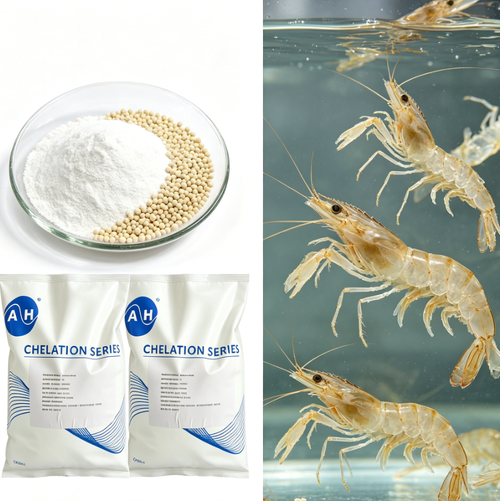
Addressing Mineral Utilization Challenges in Feed Manufacturing with Amino Acid Chelated Magnesium The Growing Importance of Mineral Selection in Animal Feed Mineral supplementation is a fundamental part of modern animal nutrition programs. As feed manufacturers develop more specialized formulations for livestock and aquaculture production, selecting appropriate mineral sources has become increasingly important. Traditional mineral ingredients are commonly used in feed production; however, formulation engineers continue to evaluate different mineral forms based on factors such as compatibility, processing requirements, animal nutrition objectives, and ingredient management. Amino acid chelated magnesium represents one approach that combines magnesium with amino acid components through a chelation process, creating an organic mineral ingredient designed for use in animal feed formulations. Understanding Amino Acid Chelated Magnesium Structure For feed manufacturers, the evaluation of a chelated mineral product usually focuses on measurable technical characteristics, including: · Magnesium content specification · Amino acid source and composition · Chelation manufacturing process · Physical appearance · Solubility characteristics · Mixing compatibility · Storage requirements These parameters provide a practical foundation for quality evaluation and formulation planning. Rather than relying on general performance claims, feed companies increasingly require technical documentation that explains raw materials, manufacturing processes, and quality control methods. Applications in Feed Manufacturing Amino acid chelated magnesium can be incorporated into various feed systems, including: · Premix formulations · Compound feed manufacturing · Aquaculture feed · Poultry feed · Swine feed · Ruminant nutrition products During formulation development, nutritionists consider the compatibility of mineral additives with other ingredients such as vitamins, amino acids, enzymes, and other trace minerals. Supporting Precision Nutrition Strategies Modern feed production is moving toward more precise nutrient management. Instead of simply increasing mineral inclusion levels, manufacturers are focusing on selecting ingredients that match specific formulation requirements. Organic mineral ingredients such as amino acid chelated magnesium provide another option for nutrition specialists when designing feed solutions based on animal species, growth stages, and production objectives. Conclusion Amino acid chelated magnesium is becoming an important consideration for feed manufacturers evaluating organic mineral sources. By focusing on measurable specifications, manufacturing processes, and formulation compatibility, companies can make more informed decisions when selecting mineral additives for modern animal nutrition programs.
Read More
Latest company news about Addressing Mineral Utilization Challenges in Feed Manufacturing with Amino Acid Chelated Magnesium The Growing Importanc
What Did They Say
Joanne
Joanne
we would like to express our warmest admiration for your unfailing service to us as one of our regular supplier, we greatly appreciagte your efficiency in providing best products and services
we would like to express our warmest admiration for  your unfailing service to us as one of our regular supplier, we greatly appreciagte your efficiency in providing best products and services
Anna
Anna
Dear supplier, In accordance with our quality management system based on ISO9001:2015 standards, we inform you that as a supplier you are evaluated to verify the performance of your organization. We inform you that this year 2023 you have obtained excellent service and quality.
Dear supplier, 
In accordance with our quality management system based on ISO9001:2015 standards, we inform you that as a supplier you are evaluated to verify the performance of your organization. We inform you that this year 2023 you have obtained excellent service and quality.
Nicos
Nicos
we acknowledge and appreciate your service and we look forward to have such excellence and long association with your company.
florin
florin
The packages of your company looks very good, product quality is perfect as well, we hopefully to establish longterm business with your company.
Send your inquiry
Please send us your request and we will reply to you as soon as possible.
Send